
Telegraph Mine Project
The Telegraph Mine is a past-producing, high-grade gold-silver quartz vein system located on three patented mining claims in the Mojave Desert. Mojave’s current plan is to advance the asset through a phased, capital-disciplined restart strategy that prioritizes operating proof before larger-scale development decisions.
Project highlights
- Past-producing, high-grade gold-silver system with extensive historical production, exploration and technical records
- Three patented mining claims under long-term mineral lease with operational control
- Confirmed vested mining-rights posture materially reduces permitting uncertainty
- Shallow mineralization exposed at surface for more than 2,000 feet and open at depth
- Approximately 200 yards from I-15 via historic 2.5-mile mining road
- High desert climate supports year-round field work and mining activities
- Current strategy emphasizes Gold Road-enabled Phase 0 operating proof, subject to definitive agreements and approvals
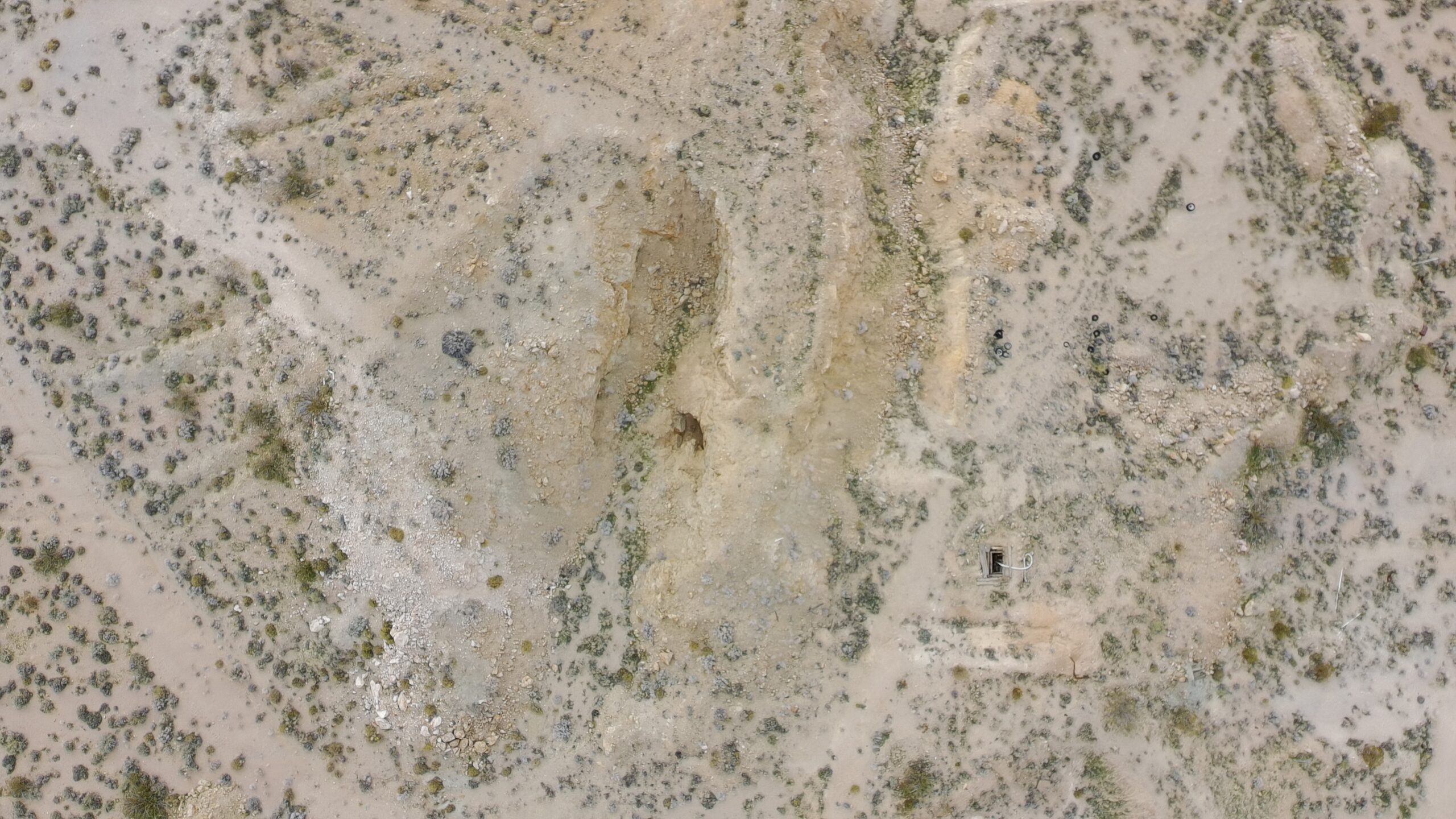
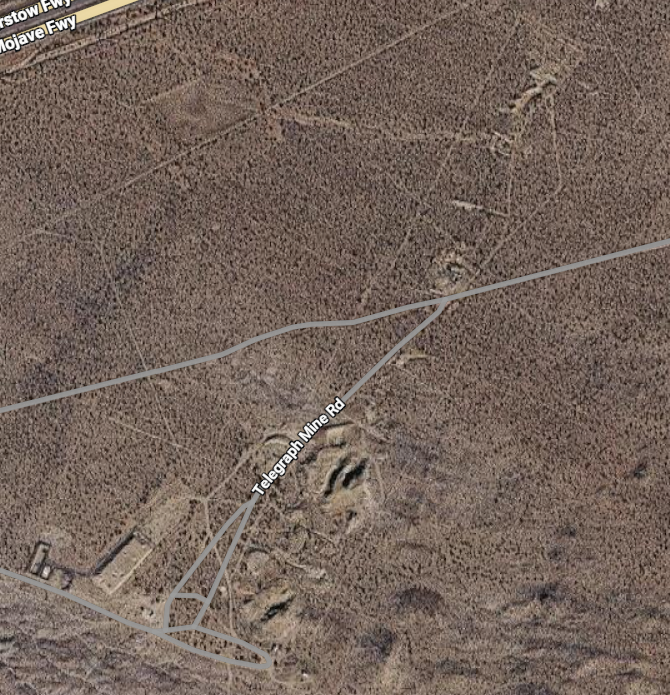 Open in Google Maps →
Historic mining
Telegraph’s historical production documents historically reported high-grade gold-silver mineralization that was mined and processed using conventional mining methods. Historical results are important context, but they are not current Mineral Resources or Mineral Reserves.
Historical underground production
- Reported production: 2,749 tons processed
- Reported gold recovered: 2,559 oz Au
- Reported silver recovered: 5,423 oz Ag
- Reported average gold grade: approximately 0.93 oz/ton Au
- Reported average silver grade: approximately 1.97 oz/ton Ag
1980s surface operating record
- The broader 1980s surface campaign is reported in Company materials as approximately 26,000 tons at approximately 0.26 oz Au/ton overall.
- More detailed technical compilations describe the principal approximately 21,000-ton CEMCORP heap-leach pile at approximately 0.26 oz Au/ton.
- Additional later material was reported at lower average grades.
- Historical operating records include grouped truck and heap-leach-pad sampling, which is methodologically different from testing small drill or retained sample fractions.
These historical figures are provided for technical context only and are not current Mineral Resources, Mineral Reserves or guarantees of Phase 0 performance.
Development implication
The historical record supports a phased technical and operating-validation strategy: use shallow, selectively mined material for Phase 0 operating proof, then use operating results and confirmatory technical work to determine whether and how to scale.
View phased strategy →Historical Telegraph production table
Recorded historical production through 1948 totaled 2,749 tons of ore, 2,559 ounces of gold, and 5,423 ounces of silver. Historical production is presented for context and is not a current Mineral Resource or Mineral Reserve.
| Year | Tons Ore | Au t oz | Ag t oz | Au avg grade / ton | Ag avg grade / ton |
|---|---|---|---|---|---|
| 1932 | 65 | 117 | 310 | 1.79 | 4.77 |
| 1933 | 511 | 298 | 1,582 | 0.58 | 3.10 |
| 1934 | 99 | 50 | 327 | 0.51 | 3.30 |
| 1935 | 44 | 17 | 113 | 0.38 | 2.57 |
| 1936 | 442 | 232 | 832 | 0.52 | 1.88 |
| 1937 | 285 | 29 | 129 | 0.10 | 0.45 |
| 1938 | 32 | 12 | 114 | 0.38 | 3.56 |
| 1939 | 199 | 286 | 530 | 1.44 | 2.66 |
| 1940 | 452 | 931 | 793 | 2.06 | 1.75 |
| 1941 | 119 | 188 | 187 | 1.58 | 1.57 |
| 1942 | 216 | 261 | 244 | 1.21 | 1.13 |
| 1946 | 155 | 74 | 141 | 0.48 | 0.91 |
| 1947 | 117 | 47 | 100 | 0.40 | 0.85 |
| 1948 | 13 | 18 | 21 | 1.38 | 1.62 |
| Total | 2,749 | 2,559 | 5,423 | 0.93 | 1.97 |
Exploration & data depth
Telegraph benefits from an unusually large historical exploration record for a small, high-grade vein system. The current development plan is designed to validate the most important historical assumptions through staged field work, operating proof, and confirmatory drilling.
Exploration summary
- 159 drill holes and 1,500+ assayed samples in the historical database
- More than 6,500 feet of total drilling
- 300+ surface samples
- 16 trenches across the vein with 80+ assays
- Geologic work includes Peter Lange’s 1988 master’s thesis on Telegraph geology
- Historical work indicates mineralization continuity along strike and down dip, with the system open at depth
State mineral classification
The California Geological Survey classified Telegraph as MRZ-2a, a state mineral-resource classification indicating that data show significant measured or indicated resources under California mineral land classification terminology.
MRZ classifications are not NI 43-101 Mineral Resource or Mineral Reserve estimates. They are useful state-level land-use and mineral-resource planning classifications, not securities-disclosure resource categories.
Read technical disclosure →2026 modern validation
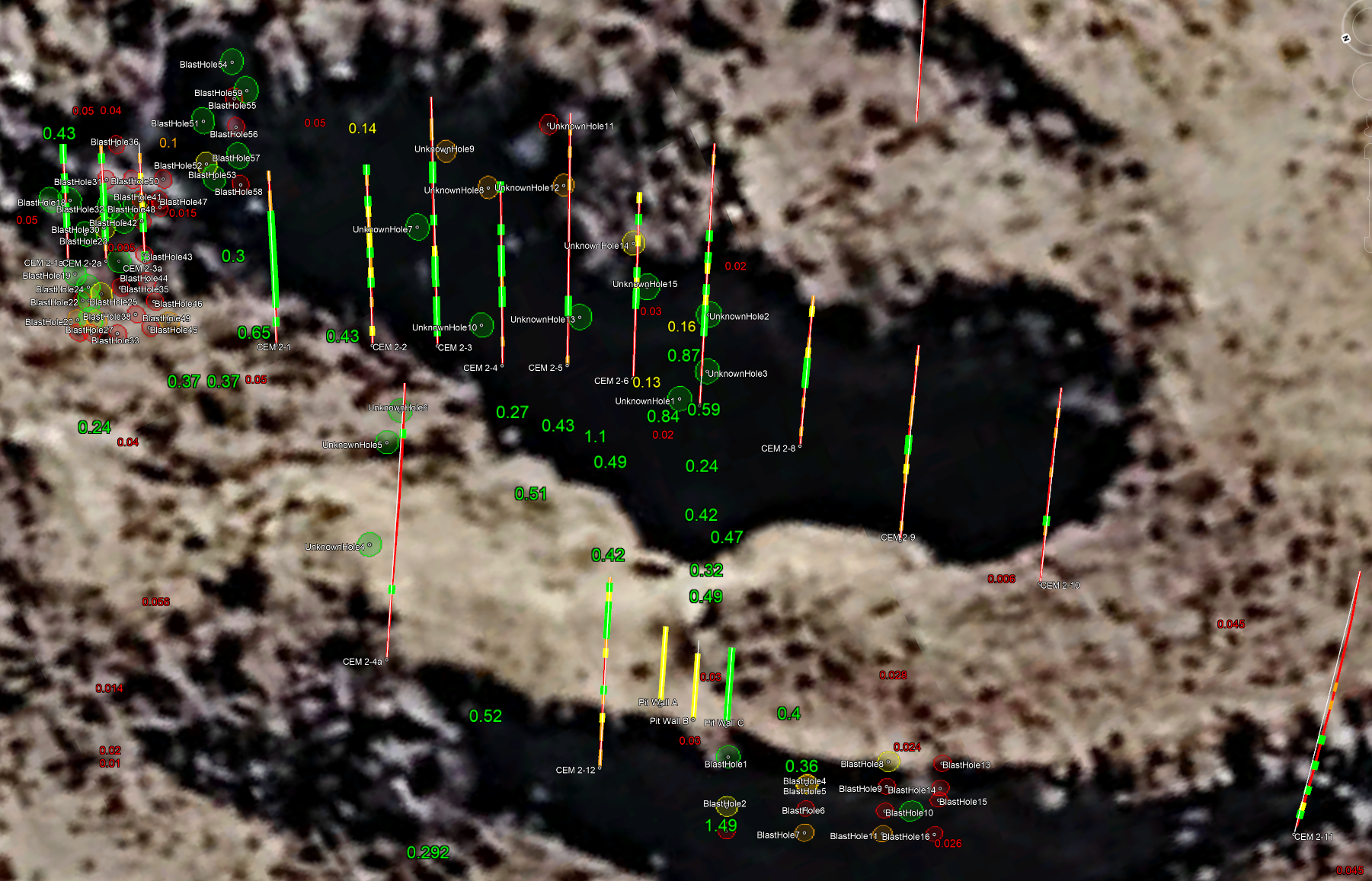
Modern independent assay testing confirmed meaningful gold in selected surviving historical Telegraph samples. The testing also demonstrated material differences between several historical assay values and modern results obtained from the surviving retained material.
As a result, Mojave continues to use the historical database extensively for geology, structural interpretation and target selection, but does not treat individual historical assay values as precise modern grade measurements without confirmation.
Mineralization framework
Telegraph is being evaluated primarily as a selective, higher-grade vein system rather than a bulk-tonnage concept. The current model prioritizes a high-grade, phased approach: shallow material for operating proof, near-surface material for potential scale-up, transitional mineralization for resource development, and deeper sulfide material as longer-term upside.
| Domain | Start depth | End depth | Mining context | Data support | Role in development plan |
|---|---|---|---|---|---|
| Oxide / weathered vein at surface | Surface outcrops | ~30 ft | Selective surface mining, trenches, shallow cuts, hillsides | Historical data density: High; modern grade validation: Ongoing | Near-term Phase 0 operating proof and grade-control test |
| Oxide / weathered vein + halo | ~30 ft | ~115 ft | Potential shallow open-pit mining on patented ground | Historical data density: High; modern grade validation: Ongoing | Primary shallow Phase 2 scale-up target, subject to Phase 0 proof and approvals |
| Oxide-sulfide transition vein system | ~115 ft | ~300 ft | Potential shallow underground access, short ramps, stopes | Moderate: dense historical drilling, mapped workings, partial depletion | Key target for Phase 1 resource work and longer-term development optionality |
| Primary sulfide vein at depth | ~300 ft | ~1,500 ft | Potential deeper underground development | Lower: geologic model and limited deeper drilling | Longer-term exploration and development upside; not required for Phase 0 base case |
What Phase 0 is designed to prove
Phase 0 is a controlled operating test. Its purpose is not to prove the entire mineral system. Its purpose is to test the near-term assumptions that determine whether Telegraph can move from historical geological evidence to practical operating confidence.
Mining proof
- Can near-surface material be selectively mined at target grade?
- Can dilution be controlled in practical field conditions?
- Can mining cost stay near target levels?
- Can site controls, safety procedures, and contractor workflows perform as planned?
Processing proof
- Can Telegraph ore meet processor acceptance criteria?
- Can ore compatibility and permit compatibility be confirmed?
- Can sampling, assaying, chain-of-custody, and settlement procedures be implemented cleanly?
- Can Mojave assays reconcile with processor settlement results?
Permitting proof
- Can the vested-rights posture translate into practical Phase 0 approvals?
- Can reclamation planning and financial assurances be completed efficiently?
- Can access-road, biological, botanical, archaeological, and County requirements be managed?
- Can Mojave establish a repeatable California operating pathway?